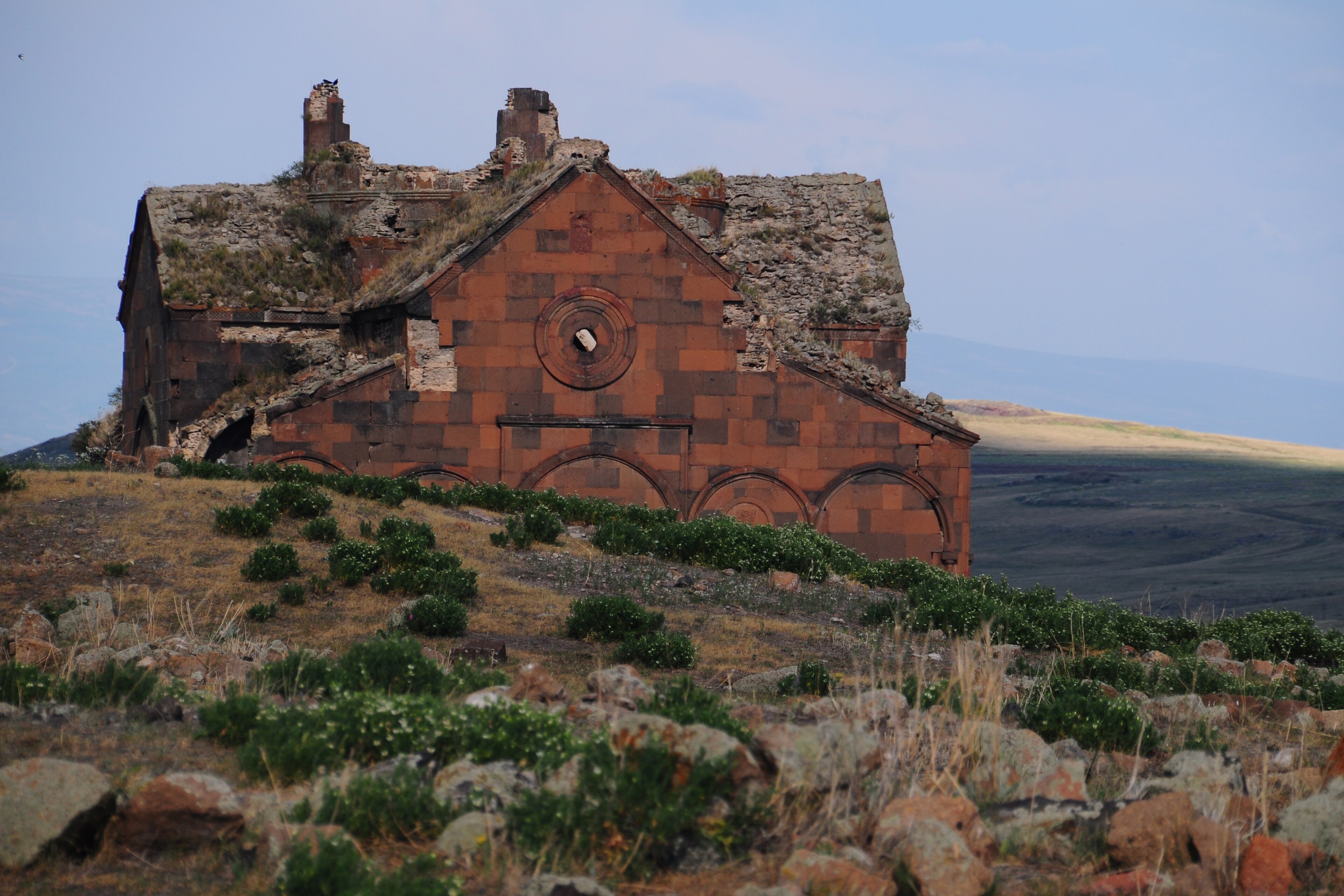
Kars is a high-plateau town in northeast Türkiye, close to the border with Armenia, and the base for visiting Ani, the ruined medieval capital 42 km to the east and a UNESCO World Heritage site since 2016. Kars is also the eastern end of the Doğu Express, the railway that crosses the eastern highlands from Ankara via Erzurum. One full day covers Ani and the old centre of Kars; a few hours on the train add the landscape in between.
Why go to Kars and Ani?
For Ani above all. On a triangular plateau above the Arpaçay ravine, which forms the natural border with Armenia, stand the remains of a city that flourished in the 10th and 11th centuries as a capital of the medieval Armenian kingdom of the Bagratids, on a branch of the Silk Roads. Byzantine, Seljuk and Georgian rulers followed. UNESCO describes buildings from almost every architectural type of the region between the 7th and 13th centuries, and a decline that began with the Mongol invasion and an earthquake in 1319. By the 18th century the city was all but abandoned.
Kars itself is a different kind of stop: a frontier town at 1,750 m, with a hilltop castle and, at the station, historic buildings that TCDD, the national railway, describes as Baltic in style.
What to see at Ani
The site is large and open, with long distances on foot between the monuments. UNESCO groups them in three areas: the citadel, the walled city and the slopes outside the walls.
The walled city: the Cathedral, the Fire Temple, the Emir Ebu’l Muammeran Complex, the Seljuk Palace, the market and the Silk Road Bridge, inside the ramparts of King Smbat II. Christian, Zoroastrian and Muslim buildings stand within walking distance of each other.
The citadel: the ruins of the Kamsaragan palace and several churches, among them the Palace church and the church with six apses.
Outside the walls: rock-cut rooms and caves on the slopes of the Bostanlar valley.
Every monument at Ani has structural problems, according to UNESCO, and conservation work continues. Stay on the paths, and expect some buildings to be fenced off or under scaffolding. Opening hours and entry fees change: check them on the Ministry of Culture and Tourism’s museum site before you go.
What to see in Kars
Kars Castle: on the hill above the old town.
The old centre: the streets below the castle, best seen on foot.
The museum of the Caucasus front: on the wars fought along this frontier.
Kars station: the end of the line for the Doğu Express, with historic buildings that TCDD describes as Baltic in style.
What is the Doğu Express?
The Doğu Express (Doğu Ekspresi, “the Eastern Express”) is the train between Ankara and Kars, run by TCDD Taşımacılık. It crosses central and eastern Anatolia via Sivas, Erzincan and Erzurum. There are two ways to ride it.
The regular train and the touristic train
The regular Doğu Express is a scheduled service on the line, used by local passengers as well as visitors.
The Touristic Doğu Express is a separate train of sleeping and dining cars. TCDD describes a route of 1,360 km and about 33 hours from Ankara to Kars, with longer stops for sightseeing in Erzincan and Erzurum on the way east, and in İliç, Divriği and Sivas on the way back. In November 2026, TCDD lists its 2026-27 season from late December to March.
Timetables, running days and fares change from season to season. Check them on the official Touristic Doğu Express page and the TCDD ticket site before you plan around a train.
Do you need to ride the whole line?
No. A daytime section shows the eastern highlands without a night on board. Between Kars and Erzurum the train takes around five hours across the high plateau, which is the section our Eastern Turkey tour rides in reserved Pullman seats.
How many days do you need in Kars?
One full day: Ani in the morning, when the light is low across the plateau, and the old centre of Kars and the museum in the afternoon. With an extra night you can add the Doğu Express the next morning, or arrive from Doğubayazıt and Mount Ararat the day before.
When is the best time to visit Kars?
Kars lies at 1,750 m, so winters are long, cold and snowy. That is the season of the touristic train. For walking at Ani, the milder months from late spring to early autumn are more comfortable; bring warm layers in any season. See our guide to the best time to visit Turkey for the rest of the country.
Ani lies on the border with Armenia. Check your government’s travel advice before booking, as it can change for border areas.
How do Kars and Ani fit into an Eastern Turkey route?
Kars is the northeastern end of a longer journey. A classic route through the east starts with Mount Nemrut, Şanlıurfa and Göbeklitepe, continues to Mardin and Lake Van, and stops there; our Eastern Turkey itinerary and Mardin travel guide describe that part. From Van the road continues north past Mount Ararat and İshak Paşa Palace to Kars and Ani, and the Doğu Express then carries you west to Erzurum.
Kars, Ani and the Doğu Express with KAMPA Tours & Events
Our Eastern Turkey Grand Loop is an 11-day tour from Antalya that closes its eastern loop exactly this way. On day 8 the group stops at Mount Ararat and İshak Paşa Palace and sleeps in Doğubayazıt. Day 9 is for the salt caves of Tuzluca, a long walk through Ani, the museum of the Caucasus front and the old centre of Kars, with the night at the Işıl Park 4★ or similar. On day 10 the group takes the Doğu Express from Kars to Erzurum in reserved Pullman seats, then drives on to Bayburt, and day 11 brings Sümela Monastery and the flight from Trabzon back to Antalya.
Departures are planned on request for groups. Prefer to start in Istanbul and spend longer in Mardin and Tur Abdin? 13 Days of Eastern Turkey goes no further east than Lake Van and does not go to Kars.