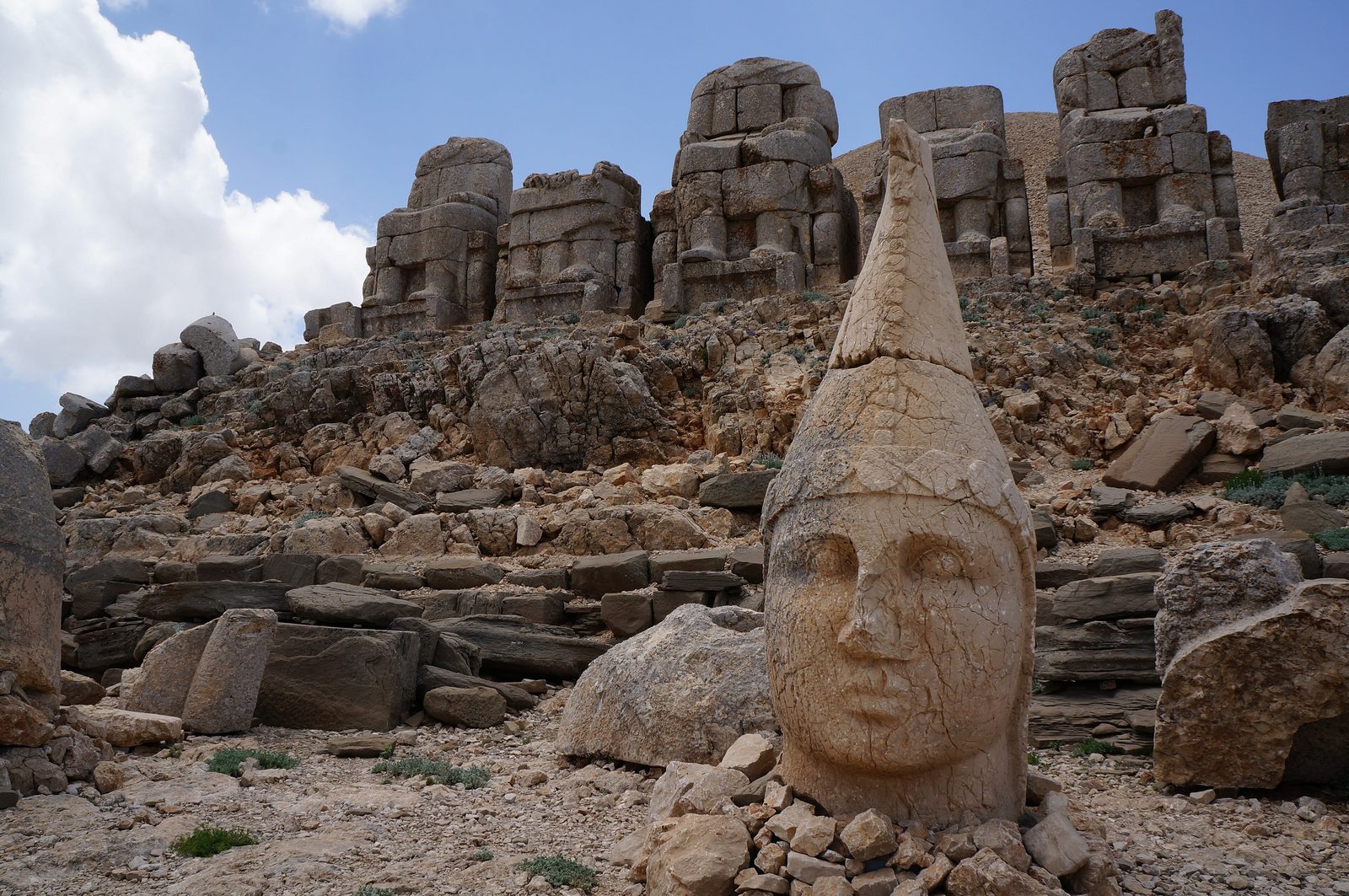
East of the Euphrates, Turkey becomes another journey: Mesopotamian plains, honey-coloured stone towns, Syriac monasteries still in use, a mountain-top tomb guarded by giant stone heads, and the oldest monumental site humans have ever found. It is less visited than Istanbul or Cappadocia, and for many travellers the most memorable part of the country.
The highlights
Gaziantep and Zeugma
Gaziantep is Turkey’s capital of pistachios and baklava, and home to the Zeugma Mosaic Museum, one of the largest mosaic collections in the world, including the famous “Gypsy Girl”. Nearby, Halfeti sits on the Euphrates, its old town partly submerged by a dam lake and best seen by boat.
Mount Nemrut
On a summit above 2,100 metres, King Antiochus I of Commagene built his tomb in the 1st century BC and surrounded it with colossal statues of gods and kings. Their fallen heads now stand on the terraces, lit gold at sunrise and sunset. The summit road is usually open from late spring to autumn.
Şanlıurfa and Göbeklitepe
Göbeklitepe, a UNESCO site, is a ring of carved stone pillars raised more than 11,000 years ago, before farming, pottery or writing. In Şanlıurfa itself, the sacred fish pools linked to the Prophet Abraham, the old bazaar and the archaeology museum complete the visit.
Mardin and Tur Abdin
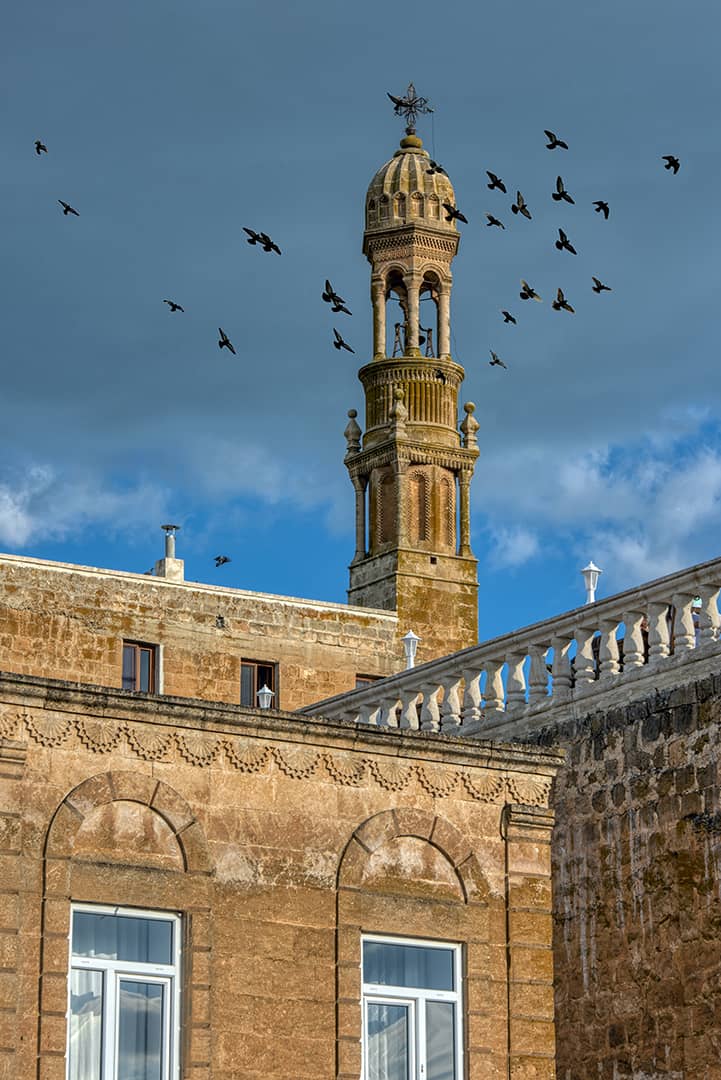
Mardin’s stone houses tumble down a hillside above the Mesopotamian plain. Around it lie Deyrulzafaran and Mor Gabriel, among the oldest active monasteries in the world, the town of Midyat and the villages of the Tur Abdin plateau.
Hasankeyf and Lake Van
Hasankeyf, an ancient settlement on the Tigris, has been partly moved to a new cultural park after the building of a dam. Further east, Lake Van is Turkey’s largest lake, with the 10th-century Armenian Church of the Holy Cross on Akdamar Island and the Urartian fortress of Çavuştepe.
How many days?
Ten to fourteen days, including flights from and to Istanbul. Distances are long, so a good route flies into Gaziantep and out of Van, driving in between: Gaziantep, Nemrut, Şanlıurfa, Mardin, Hasankeyf, Van. Below ten days, choose between the southeast (Gaziantep, Nemrut, Şanlıurfa, Mardin) and Lake Van.
When to go
April to May and late September to October. Summer is very hot in the southeast, often above 40 °C in Şanlıurfa and Mardin, and winter is cold and snowy around Van and on Mount Nemrut, where the summit road closes. See our guide to the best time to visit Turkey.
Practical notes
Dress more conservatively than in Istanbul or on the coast, especially in mosques, monasteries and villages.
Early starts are part of the trip: Nemrut at sunrise or sunset, and long drives between towns.
Check your government’s travel advice before booking, as it can change for areas close to the borders.
The food is a highlight in itself; see our Turkish food guide.
Eastern Turkey with KAMPA Tours & Events
13 Days of Eastern Turkey follows exactly this route: Istanbul, a flight to Gaziantep, Zeugma and Halfeti, Mount Nemrut, Şanlıurfa and Göbeklitepe, three nights in Mardin with Tur Abdin, Hasankeyf, Lake Van and Akdamar, then a flight back to Istanbul. It departs in April–May and October, with an English- or French-speaking guide, and can run privately on your own dates. For a first trip to Turkey, our 7, 10 and 14-day itineraries cover the west.