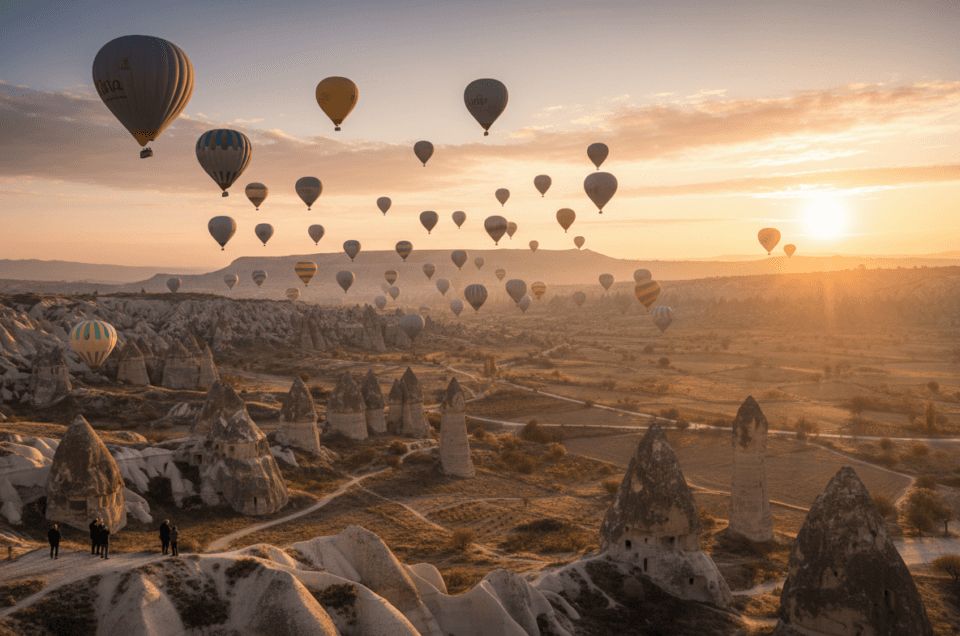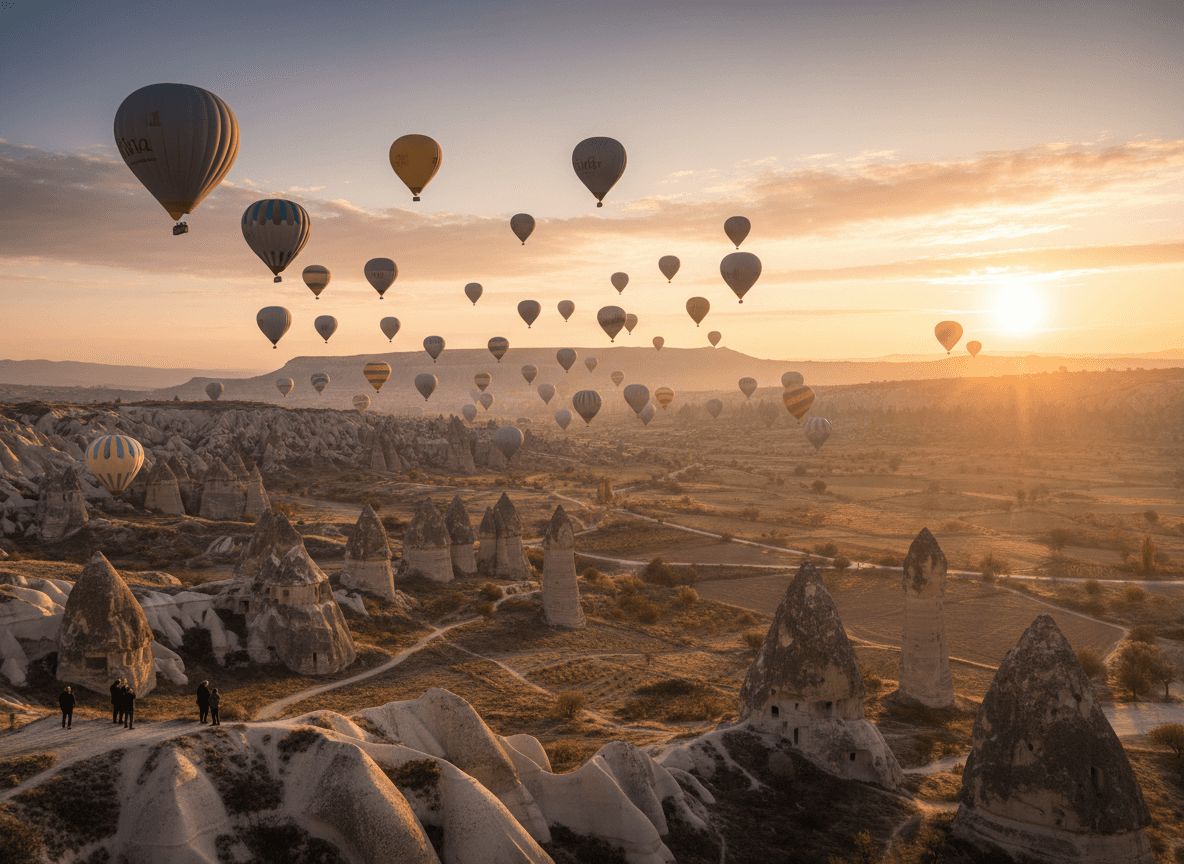
Among rock formations sculpted by wind and balloons painting the dawn sky, Cappadocia is the place most travellers picture when they think of Turkey. This guide covers what to see, how many days to plan, when to go and how to get there, from the team that brings guests here every season.
A landscape from another planet
In the heart of Central Anatolia, Cappadocia unfolds like a natural canvas shaped by lava, wind and time. Rolling valleys, fairy chimneys and stone-carved villages make you feel as if you have landed on another planet. From the underground cities of Derinkuyu and Kaymaklı to the Byzantine frescoes of the Göreme Open-Air Museum, every step reveals centuries of art, faith and survival.
What to see in Cappadocia
Göreme Open-Air Museum: UNESCO-listed rock-cut churches with frescoes from the 10th to 12th centuries.
Paşabağ and Devrent: the most photographed fairy chimneys, some with three “caps”.
Kaymaklı or Derinkuyu: underground cities several levels deep, carved as refuges with stables, chapels and ventilation shafts. See our guide to the underground cities.
Uçhisar Castle: the highest point of the region, with a view over Pigeon Valley.
Red Valley and Love Valley: easy walks and the classic sunset viewpoints.
Avanos: pottery workshops on the Kızılırmak, Turkey’s longest river.
The most beautiful sunrise on Earth
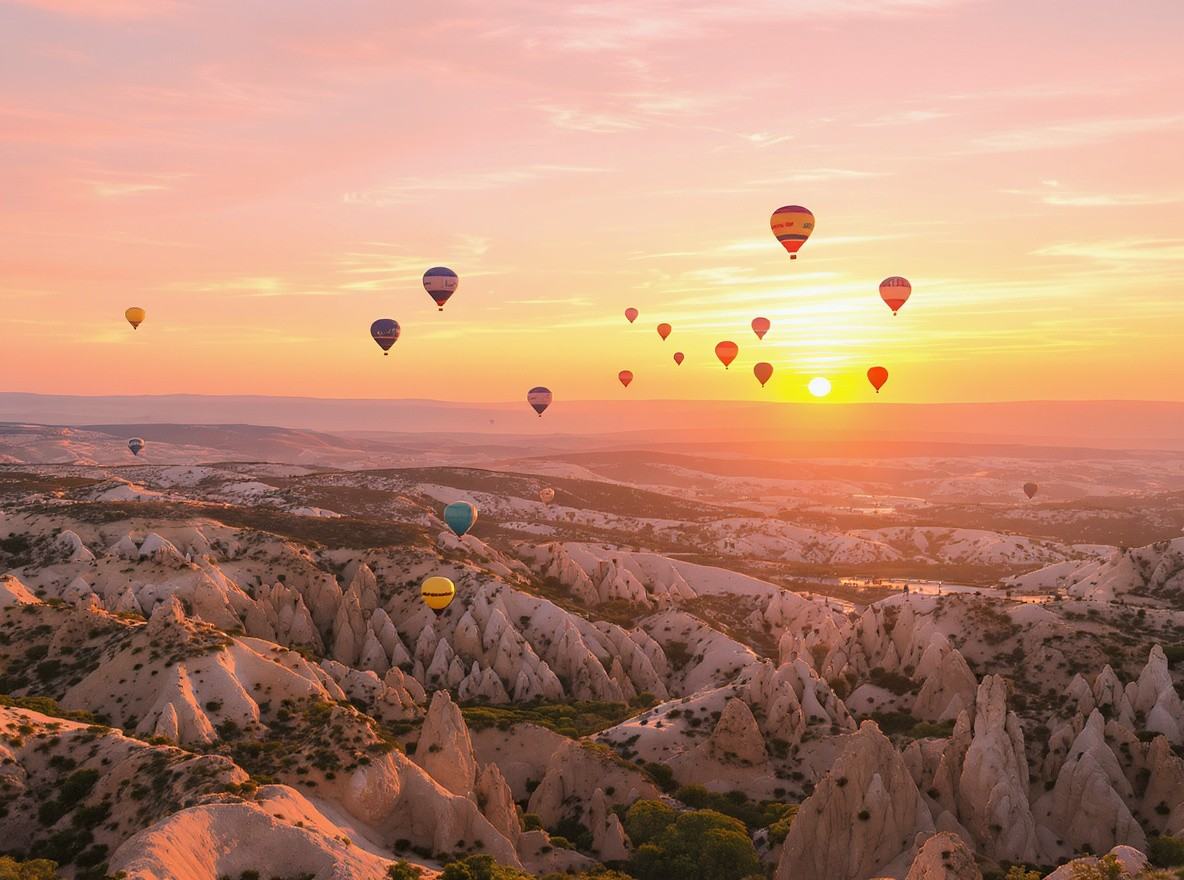
Hundreds of hot-air balloons ascend together over valleys bathed in golden and pink light. Aboard, silence turns into poetry: only the soft hiss of the flame and the whisper of the wind. Flights depend on the weather and are cancelled more often in winter; our Cappadocia hot air balloon guide explains how a balloon morning works, what it costs and what happens when the wind says no.
Sleep in caves with history
Rock-carved hotels blend authenticity with modern comfort. A night beneath centuries-old stone ceilings, lit by Turkish lamps, feels like living history, and many boutique cave hotels in Göreme, Uçhisar and Ürgüp have terraces facing the balloons at sunrise.
Flavours of Anatolia
Testi kebab cooked in a sealed clay pot, handcrafted wines from Ürgüp, bread from village ovens, and the markets of Avanos with their hand-painted ceramics and carpets. More dishes worth travelling for in our Turkish food guide.
How many days in Cappadocia?
Plan two nights at the very least, three if you want to walk the valleys and keep a spare morning for the balloons. One full day covers Göreme, Paşabağ and Uçhisar; a second day is for an underground city, Avanos and a valley walk. A third morning gives a second chance if the first balloon flight is cancelled.
When to go
April to June and September to October bring mild days, green or golden valleys and the most regular balloon flights. July and August are hot and dry at midday but cool at dawn. Winter brings snow-covered valleys under a crystal-blue sky, with cold nights well below freezing. See our guide to the best time to visit Turkey for the whole country, region by region.
Getting there
Two airports serve the region: Nevşehir Kapadokya and Kayseri, each a little over an hour’s flight from Istanbul, then a transfer of roughly 40 minutes to an hour to Göreme. Overnight buses also run from Istanbul and Ankara. On a tour, flights and transfers are arranged for you.
Travel tips
Wear comfortable shoes: valley trails are rocky and dusty.
Bring a warm layer even in summer; dawn is cold at 1,000 metres.
Visit the Open-Air Museum early or late in the day to avoid the tour-bus peak.
Cappadocia with KAMPA Tours & Events
Cappadocia features in four of our eight escorted journeys, with two or three nights in the region and balloon slots reserved in advance for guests who want the sunrise flight: Turkey: Off the Beaten Path, Highlights of Turkey + Antalya, Highlights of Turkey in winter and From Istanbul to Athens. Read more about the region on our Cappadocia destination page.