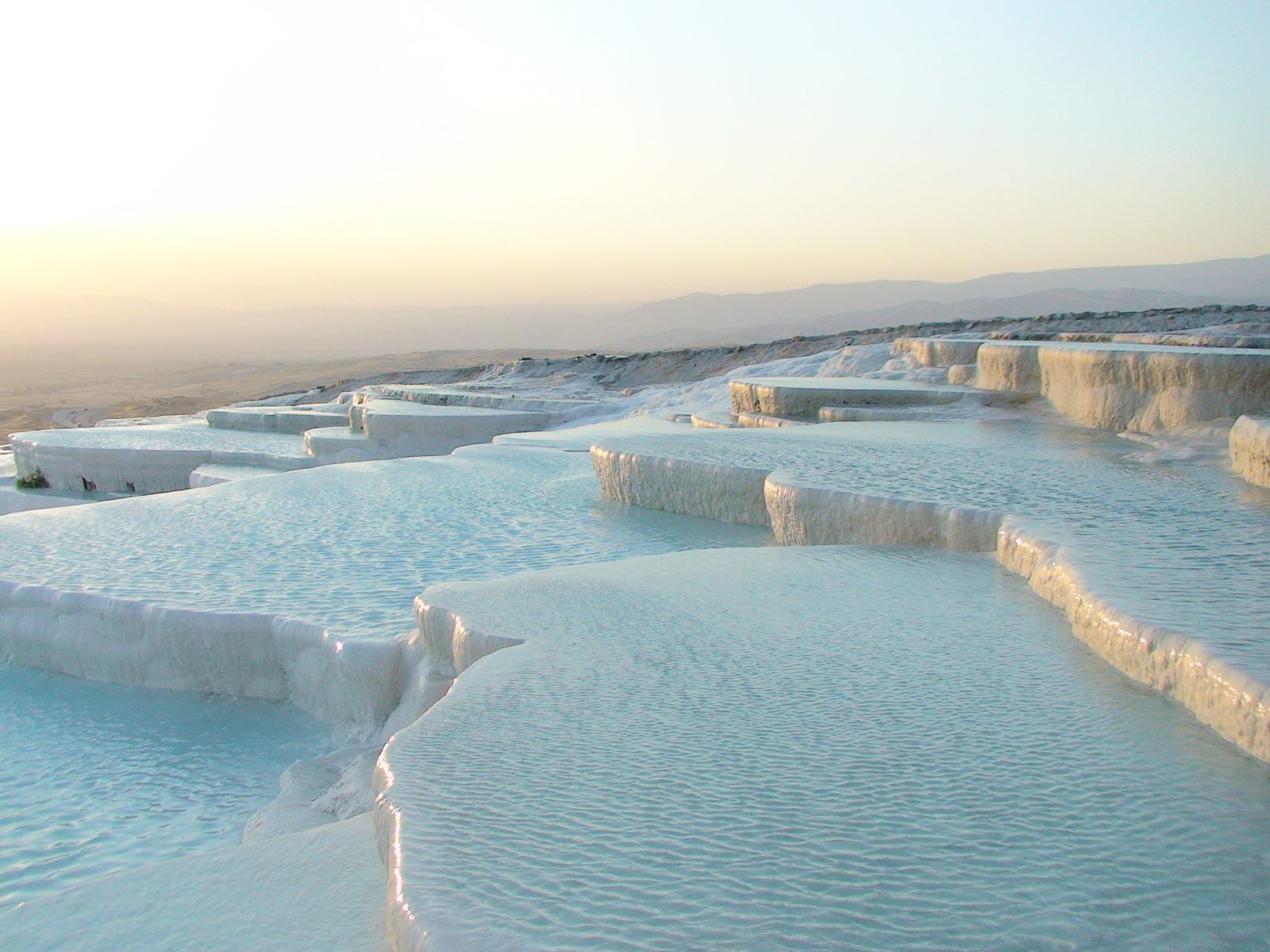
From a distance Pamukkale looks like a snowfield on the side of a hill. Up close it is a cascade of white travertine terraces and pale blue pools, formed over thousands of years by calcium-rich thermal water. On the plateau above lie the ruins of Hierapolis, a Graeco-Roman spa town. Together they form one of Turkey’s UNESCO World Heritage Sites, and one of its most visited.
What to see at Pamukkale
The travertine terraces: a path climbs the white slope through shallow pools. To protect the surface, shoes come off and you walk barefoot.
Hierapolis: a great Roman theatre, colonnaded streets, city gates and one of the largest necropolises of the ancient world, with hundreds of tombs along the road.
The Antique Pool: warm thermal water over fallen marble columns, said to have been visited by Cleopatra. Swimming costs extra.
The Hierapolis Archaeology Museum: sculpture and sarcophagi from Hierapolis and nearby Laodicea and Tripolis.
Karahayıt: a thermal village just north, known for its iron-rich red springs.
Tickets and practicalities
One ticket covers the travertines and Hierapolis; the Antique Pool is paid separately. There are entrances at the bottom of the terraces and at the top of the plateau, so a guided visit often starts at the top, walks through Hierapolis and descends over the terraces. Bring sunglasses (the white surface is dazzling), a towel and a bag for your shoes. The travertine is not slippery where the water is calcified, but it can be rough underfoot.
The best time to visit
Come early in the morning or late in the afternoon. In July and August the plateau has little shade and midday heat is intense; the light at sunset turns the terraces gold and pink. Spring and autumn are the most comfortable seasons, and winter visits are quiet, with steam rising from the warm pools. See our guide to the best time to visit Turkey for the whole country.
How long to stay
Half a day is enough for the terraces and the main sights of Hierapolis; a full day lets you add the museum, the pool and the necropolis. Staying one night, in Pamukkale or Karahayıt, gives you the evening light and the early-morning calm before the coaches arrive.
Getting there
The nearest airport is Denizli Çardak, about an hour’s flight from Istanbul. Pamukkale sits on the classic route between Cappadocia and the Aegean: about three hours from Ephesus, around an hour and a half from the ancient city of Aphrodisias, and a long but beautiful drive from Konya.
Combining Pamukkale with the rest of Turkey
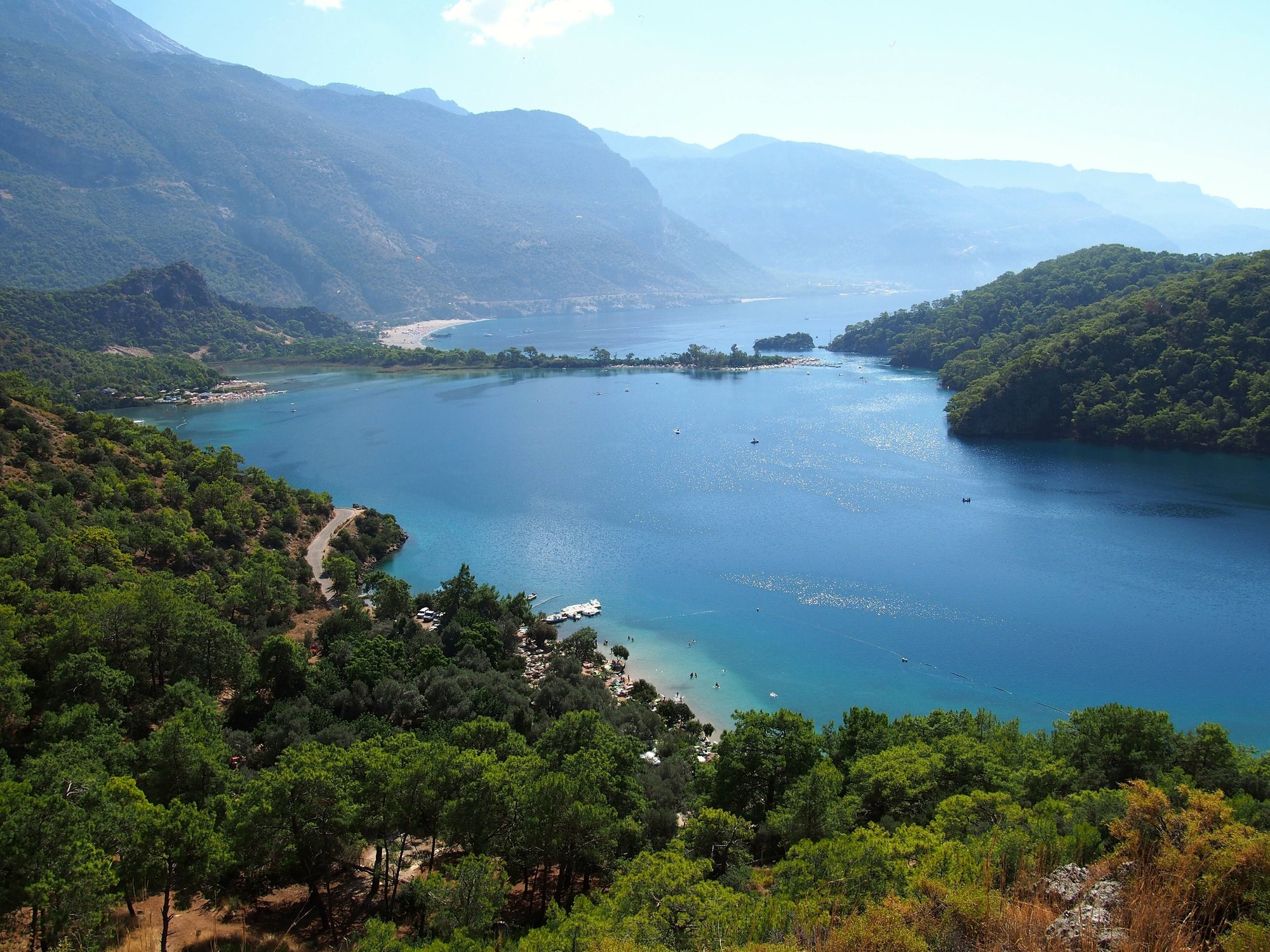
Most travellers see Pamukkale on the way between Cappadocia and Ephesus, or as a day inland from the coast. Our 7, 10 and 14-day Turkey itineraries show where it fits, and our Fethiye and Ölüdeniz guide covers the coast to the south.
Pamukkale with KAMPA Tours & Events
Pamukkale is an overnight stop on Highlights of Turkey + Antalya (with Aphrodisias), Highlights of Turkey in winter, From Istanbul to Athens, The Turkish Riviera (with Karahayıt) and The Blue Tour, where Hierapolis is offered as an option at EUR 35 per person.